
For many Homeowners, preparing to travel is often the easy part.
The harder part can be preparing emotionally for leaving pets behind, especially when those animals are deeply attached to familiar routines, people and everyday patterns at home.
Even when a Homeowner feels confident about the Guardian they have chosen, there is often still one question sitting quietly underneath everything else:
“How can I help my pets feel as comfortable and settled as possible while I’m away?”
Thoughtful preparation can make a real difference.
Many animals respond well when familiar routines, environments and expectations are kept as consistent as possible. Changes in household activity, body language, routine and the arrival of someone new can all affect how quickly a pet settles, which is why preparation before the stay matters.
At The Guardians Tribe, we believe trusted house and pet sitting begins well before the travel dates themselves.
The strongest mutual-exchange arrangements usually happen when Homeowners prepare honestly and thoroughly, Guardians take the time to understand the pets and their routines, and everyone has the information they need before the stay begins.
That preparation helps give pets the best possible chance of feeling secure, settled and comfortable while their people are away.
Familiar Routines Help Pets Feel Secure
One of the most helpful things Homeowners can do before a Guardian stay is keep familiar routines as consistent as possible.
Many pets take comfort from predictability. Feeding times, walk schedules, sleeping habits, medication routines and the smaller patterns of everyday life can all help an animal feel secure in familiar surroundings.
When several of those things change at once, some pets may become unsettled.
That is why good preparation matters.
A Guardian should understand the pets’ normal daily rhythm before the Homeowner leaves. Not just the practical tasks, but also the small habits that help the animals feel comfortable and the signs that tell you they are behaving normally.
What time does the dog usually wake up?
Where does the cat normally sleep?
Do the pets expect company in the evening?
Are there favourite toys, familiar walking routes or routines that help them settle?
How is medication usually given, and at what times?
Are there particular behaviours that are completely normal for that pet but might look unusual to someone who does not know them?
The more clearly those details are shared beforehand, the easier it becomes for a Guardian to maintain consistency and notice quickly if something genuinely changes.
Familiar routines cannot remove every adjustment, but they can help make the transition into a Guardian’s care feel far more predictable and reassuring for the animals involved.
Introductions Should Feel Calm, Not Rushed
One of the most helpful things Homeowners can do before a Guardian stay is keep familiar routines as consistent as possible.
Many pets take comfort from predictability. Feeding times, walk schedules, sleeping habits, medication routines and the smaller patterns of everyday life can all help an animal feel secure in familiar surroundings.
When several of those things change at once, some pets may become unsettled.
That is why good preparation matters.
A Guardian should understand the pets’ normal daily rhythm before the Homeowner leaves. Not just the practical tasks, but also the small habits that help the animals feel comfortable and the signs that tell you they are behaving normally.
What time does the dog usually wake up?
Where does the cat normally sleep?
Do the pets expect company in the evening?
Are there favourite toys, familiar walking routes or routines that help them settle?
How is medication usually given, and at what times?
Are there particular behaviours that are completely normal for that pet but might look unusual to someone who does not know them?
The more clearly those details are shared beforehand, the easier it becomes for a Guardian to maintain consistency and notice quickly if something genuinely changes.
Familiar routines cannot remove every adjustment, but they can help make the transition into a Guardian’s care feel far more predictable and reassuring for the animals involved.
Clear Instructions Create Confidence
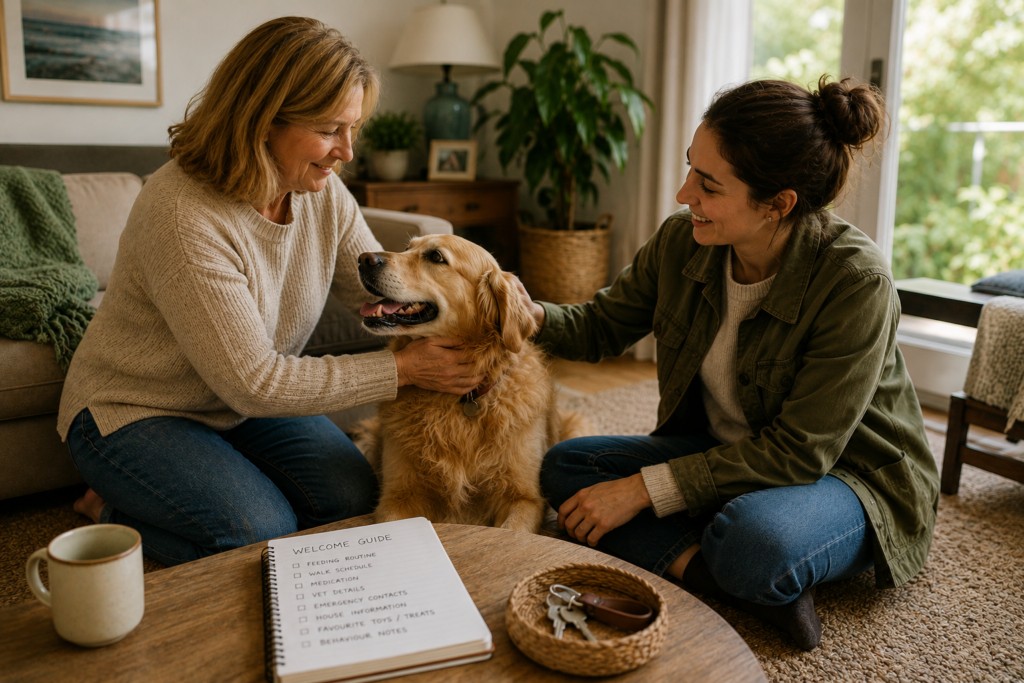
One of the most helpful things a Homeowner can do for both their pets and their Guardian is provide clear written instructions before travelling.
A proper home and pet care welcome guide removes uncertainty and helps familiar routines continue as smoothly as possible. It allows Guardians to focus on caring for the animals rather than constantly second-guessing small details or trying to remember everything from a verbal handover.
A strong welcome guide should usually include:
- Feeding routines, quantities and any dietary restrictions
- Medication instructions, timings and how medication is normally given
- Walk schedules, preferred routes and any areas to avoid
- Emergency contacts
- Vet details and clear instructions for what to do if urgent care is needed
- Behaviour notes, triggers and anything the Guardian should be aware of
- Sleeping arrangements
- Household information and practical instructions
- Favourite toys, comfort items or calming routines
- Anything the pets dislike, fear or react strongly to
- What is considered normal behaviour for each pet
- Where leads, carriers, medication and emergency supplies are kept
- Communication preferences while the Homeowner is away
The clearer and more complete the information, the easier it is for the Guardian to maintain consistency and make sensible decisions if something unexpected happens.
For pets, that continuity can make the stay feel much more familiar, even while their owners are away.
Leaving Familiar Comforts Helps
Pets can often settle more easily when familiar comforts remain available in the places they normally expect to find them.
Favourite blankets, beds, toys, feeding bowls and usual sleeping spaces can all provide continuity during a Guardian stay. Familiar scents, textures and routines can help the home feel predictable even when the people caring for the pets have temporarily changed.
Some Homeowners also choose to leave an item of recently worn clothing nearby, particularly for pets who are strongly attached to them. For some animals, familiar scent may be reassuring, although every pet responds differently.
It is usually best to avoid unnecessary changes immediately before a stay. Moving beds, introducing new feeding arrangements or changing where a pet sleeps can add extra disruption at a time when consistency is especially helpful.
These details may seem small, but together they can make the transition feel much more familiar and settled for the animals involved.
Honest Conversations Help Create Better Matches
Preparation also depends on honesty.
If a pet experiences separation-related behaviour, nervousness, reactivity, medical needs, strong routines or particular triggers, those details should be discussed openly with the Guardian before the stay is agreed.
Good Guardians value that honesty because it helps them decide whether the arrangement is genuinely right for them and gives them time to prepare properly if it is.
The same applies in reverse. Guardians should also be clear about their own experience, confidence and limitations, particularly around medication, behavioural challenges, larger animals or specialist care.
The goal is not to present “perfect” pets or a perfect Guardian.
It is to create the right match between the animals, the home and the person who will be caring for them.
Clear, honest conversations before the stay usually lead to calmer, safer and more successful arrangements later.
Pets Often Mirror Human Emotions
Many pets are very aware of changes in the people and environment around them.
They may notice differences in tone of voice, body language, household activity or familiar routines, especially around departure day when bags are being packed and normal patterns begin to change.
If the atmosphere becomes rushed or chaotic, some pets may become unsettled. Keeping routines as normal as possible, allowing enough time for a calm handover and avoiding unnecessary last-minute disruption can make the transition easier.
This does not mean Homeowners need to hide their emotions. Pets are deeply loved family members, and it is completely natural to feel emotional about leaving them.
What matters is creating as much consistency and reassurance as possible around the change.
Clear preparation, familiar routines and confidence in the Guardian can all help make departure day feel calmer for the pets, the Homeowner and the Guardian alike.
Trusted Guardians Help Maintain Stability
A good Guardian understands that their role is not simply to “watch the pets.”
Their role is to help maintain as much consistency, reassurance and routine as possible while the Homeowner is away.
That may mean keeping walks at familiar times, following feeding and medication routines carefully, respecting sleeping habits, understanding known anxieties or triggers, and giving the animals the kind of company and space they are used to.
It also means recognising when something changes and communicating appropriately if a pet appears unwell, unusually unsettled or behaves differently from normal.
This is one of the reasons trusted house and pet sitting can work so well for many animals. Instead of being moved into a completely unfamiliar environment, pets can remain in their own home, surrounded by familiar smells, spaces and routines.
For many pets, that continuity can make the transition far easier and help the stay feel less disruptive while their people are away.
Every Pet Is Different
Every animal responds differently to change.
Some pets settle quickly with new people, while others need more time. Some dogs are naturally social and adaptable. Some cats may keep their distance at first and only begin approaching once they feel more comfortable.
None of that automatically means something is wrong.
Animals adjust at their own pace, and good preparation can help make that transition smoother. Patience matters just as much as routine.
A Guardian should avoid forcing interaction and instead give the pet the time and space it needs while continuing familiar routines as consistently as possible.
If the animal is eating, drinking, resting and behaving within the range the Homeowner has described as normal, a slower adjustment may simply be part of that pet’s personality.
What matters most is staying observant, maintaining consistency and communicating if anything seems genuinely unusual or concerning.
Building More Trusted Home and Pet Care Experiences
At The Guardians Tribe, we believe the strongest house and pet sitting arrangements are built around preparation, communication and trust.
That means helping Homeowners feel confident that they have shared the information a Guardian genuinely needs.
It means helping Guardians feel prepared, informed and clear about the responsibilities they have agreed to take on.
And it means creating the best possible conditions for pets to remain safe, settled and well cared for while their people are away.
Within a mutual-exchange community, that responsibility is shared. Homeowners, Guardians and the platform all have a role to play in creating clearer, safer and more successful stays.
Good house and pet sitting is never only about logistics.
It is also about understanding the animal in front of you, respecting their routines and recognising that their wellbeing matters just as much as the practical arrangements around the stay.
Ready to Explore Trusted Home and Pet Care?
Create your account with The Guardians Tribe to browse live Homeowner and Guardian listings and explore the community.